Six children, one teacher, and a note to you in week two.
English, mathematics and science for primary school, taught in classes of six by four teachers who have all taught in a school. No wall of results, no method with a trademark on it, and no promises about your child's grade.
Registered with the Ministry of Education as a private school for tuition. Two rooms. Six chairs in each, and we do not add a seventh.
6
children in the room
Six is the number at which a teacher can watch every child work rather than watch the front row. It is also the number at which a child who has not understood cannot hide, which is the point. When a class is full it is full and you go on the list.
12
lessons in a term
You pay by the term, not by the month, and you know before the term starts exactly what the twelve lessons cover, because it is written out level by level on the class page. If we change it mid term we tell you why.
90
minutes, Primary 3 and up
Long enough to teach something, mark it and go back over it in the same lesson. Primary 1 and 2 sit for 75 minutes, because past that they are present but they are not learning anything.
We teach the syllabus your child is actually sitting.
Nothing here is an enrichment programme running alongside school. It is the primary syllabus, at the level your child is at, in the term they are in. Science begins at Primary 3 in the syllabus, so it begins at Primary 3 here.
- English
- Composition planning, comprehension answering technique, and oral read aloud.
- Mathematics
- Concepts before speed. Heuristics taught as a small toolkit, not a list of forty.
- Science
- Science starts at Primary 3 in the syllabus, so we start it at Primary 3.
The first four weeks, in order
Parents ask what actually happens, and most centres answer with the word "assessment". Here is the sequence, and none of it costs extra.
- Lesson one
Twenty minutes of diagnostic, and it is not a test to fail
- Lessons two and three
We watch, and we write things down
- Week two
A note to you, in words, about 150 of them
- Week two, same note
One target for the term. One
- Week four
Ten minutes, and you say whether it is working
What we will not promise you
We will not promise your child an AL1, or a band, or a jump of two grades. Nobody can honestly promise that, and a centre that does is selling you the improvement your child was going to make anyway.
We will not put up a wall of results. Every name on a wall like that belongs to a child who was mostly going to do well, and the children who needed the help the most are never on it.
We will not tell you your child is fine when they are not. The week two note says what we found, including the part that is uncomfortable to read.
We will not take a class from six to ten because the term is full. When a class is full it is full, and you go on the list.
Everyone who teaches here has taught in a school
Tan Kok Seng
Mathematics, Primary 3 to 6

Nurul Huda Rahim
English, Primary 4 to 6, and oral
Ravi Kumaravel
Science, Primary 3 to 6, and Primary 6 mathematics
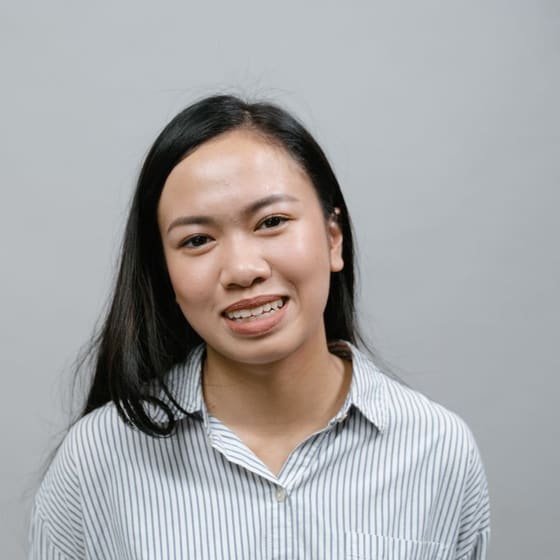
Chua Li Ping
English and mathematics, Primary 1 to 4
A trial lesson is S$45 and it is a real lesson.
Your child sits in the class they would join, in the chair they would have, with the five children who are already in it. We do not run a free trial, because a free trial is a sales lesson and the other five lose a lesson to it. If your child joins in the same term, the S$45 comes off the term fee.
- Six children to a class, two rooms, four teachers, all four of whom have taught in a school.
- A written note to you in week two of your child's first term, and one target for the term.
- Practice we write ourselves, on the level we are teaching, this term.
- A trial lesson in the real class, in the chair your child would sit in.