How we teach
Every centre says it teaches understanding rather than drilling. Here is what that actually means in each subject, with one worked example from a real lesson so you can decide for yourself.
English
Most children we see can write. What they cannot do is plan, and what they will not do is answer the question that was asked.
- Composition planning
- Four boxes on one line each, decided before the first sentence. Which box is the long one is a choice, and it is the choice that makes the composition.
- Comprehension technique
- Underline what the question is asking for. Find the line it came from. Then change the words, because lifting the sentence whole gets half the mark.
- Oral, out loud, in the room
- Reading aloud with the pauses pencilled in first. Then the conversation, in two sentences, with an eye up from the page.
Worked example · Primary 5 composition planning
"A kind act." Plan it in four boxes before you write a word.
- Box 1shortWhere, when, who. Two sentences and no more. "The lift was out again" beats three lines about the weather.
- Box 2shortThe problem arrives. One sentence saying what went wrong and one saying who it went wrong for.
- Box 3the long oneWhat she did about it, one moment at a time. Three paragraphs. This is the composition and everything else is the frame around it.
- Box 4shortWhat changed. One line showing the feeling rather than naming it.
The point of the plan is the second column. Which box is the long one is a decision, and it is made before the first sentence. Most children we meet write four boxes of roughly equal length and run out of time in the middle of box 3.
Mathematics
Concepts before speed. A child who can draw the problem can do the problem next year too, and a child who has memorised forty question types cannot.
- The bar model, drawn every time
- From Primary 3 the bar is not optional. Draw it, label it, then touch the numbers. A child who starts calculating first is guessing.
- A small toolkit of heuristics
- Six or seven, taught one at a time, each with a question it is for. Not a printed list of forty with a name on each.
- Working, because the marks are in it
- Method marks are most of Paper 2. We mark the working in front of the child and show them which line earned what.
Worked example · Primary 5 ratio, the model method
Ali had three fifths as many stickers as Bala. Bala gave Ali 24 stickers and then they had the same number each. How many stickers did Bala have at first?
- Eight units altogether, and after the move they have four each.
- So Bala gave away exactly one unit, and one unit is 24 stickers.
- Bala started with five units. 5 × 24 = 120 stickers.
A child who draws this can do next year's version of it. A child who has learned the phrase "before and after ratio" and looked for the pattern cannot, and that is the whole argument for drawing it every single time, including on the easy ones.
Science
Science answers are marked against keywords, and the honest problem is that children learn the keywords and stop understanding the thing.
- Hold it first
- Torches, mirrors, magnets, a beaker and a bicycle pump. A child who has seen the shadow move writes a better answer about shadows.
- Then the keyword
- Every answer needs the right word in it. We teach which word and, more importantly, the sentence it has to sit in.
- Cause, then effect, then because
- A two-mark answer names what happened and why. Most one-mark answers are missing the second half, not the first.
Worked example · Primary 5 heat, two marks
An ice cube was put on a metal spoon and an identical ice cube on a wooden spoon, in the same room. The ice on the metal spoon melted first. Explain why.
What most children write
"Because metal is colder than wood."
No mark. It is not colder, both spoons are at room temperature, and the sentence explains nothing.
What earns both marks
"Metal is a better conductor of heat than wood. Heat from the surroundings was conducted through the metal spoon to the ice at a faster rate, so that ice gained heat faster and melted first."
One mark for the conductor, one for the rate. Both marks are in the highlighted words.
We teach the keyword second, not first. A child who has held both spoons and felt the difference writes this sentence; a child who has memorised the sentence writes it in the wrong question.
Four teachers, and all four have taught in a school
Two of us started the studio in 2021 in a smaller unit two doors along the same corridor. Nobody here is a part time undergraduate, and nobody is a franchise trainer.
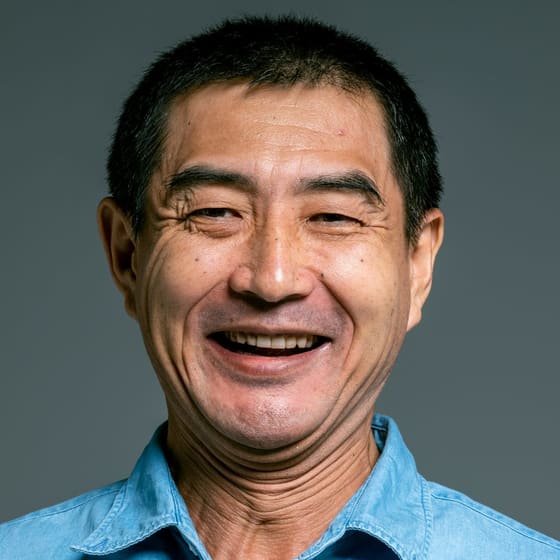
Tan Kok Seng Mr Tan
Mathematics, Primary 3 to 6
Twenty-two years teaching primary mathematics in MOE schools, the last nine as a level head. Left the service in 2021.
Started the studio with Nurul in a smaller unit two doors down. Marks a Primary 6 paper in front of the child, not overnight, because the child has forgotten what they were thinking by Thursday.

Nurul Huda Rahim Mdm Nurul
English, Primary 4 to 6, and oral
Nine years teaching Primary 5 and 6 English in a school in Ang Mo Kio, NIE-trained. Left the service in 2021.
Writes the week two notes. Will tell you that your child can write and cannot plan, which is the most common thing we find and the easiest to fix.
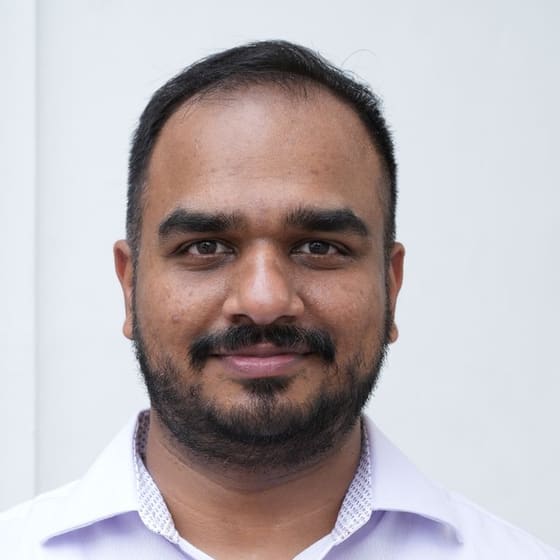
Ravi Kumaravel Mr Ravi
Science, Primary 3 to 6, and Primary 6 mathematics
Read biology at NUS, NIE-trained, six years teaching primary science before joining us in 2023.
Keeps a box of torches, mirrors, magnets and one very old bicycle pump. A Primary 4 who has held the thing writes a better answer about it, and that is the whole argument.
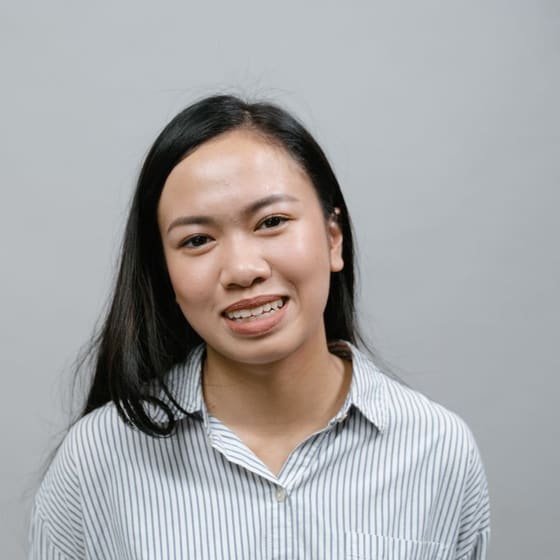
Chua Li Ping Ms Chua
English and mathematics, Primary 1 to 4
Four years teaching Primary 2 and 3 English in a school in Sengkang, NIE-trained. Two years here.
Takes the youngest classes. Will not let a Primary 1 copy an answer off the board before they have said it out loud, which makes the first three weeks slower and the rest of the term faster.
What we will not promise you
This is the paragraph most centres leave out, and it is the one worth comparing us on.
- We will not promise your child an AL1, or a band, or a jump of two grades. Nobody can honestly promise that, and a centre that does is selling you the improvement your child was going to make anyway.
- We will not put up a wall of results. Every name on a wall like that belongs to a child who was mostly going to do well, and the children who needed the help the most are never on it.
- We will not tell you your child is fine when they are not. The week two note says what we found, including the part that is uncomfortable to read.
- We will not take a class from six to ten because the term is full. When a class is full it is full, and you go on the list.